Key points at a glance
- Invalidity insurance (IV) pays a flat rate of CHF 840 for fitting one ear and CHF 1,650 for fitting both ears, at most every six years (Annex no. 5.07 HVI).
- Old-age and survivors’ insurance (AHV) pays pensioners with severe hearing loss 75% of the IV flat rate, at most every five years (Annex no. 5.57 HVA).
- For children under 18, IV pays up to CHF 2,830 for one device and CHF 4,170 for two (Annex no. 5.07.3 HVI).
- Basic health insurance only covers hearing aids if no other social insurance pays, and then according to the AHV or IV rules (MiGeL item 13.01).
- If you receive supplementary benefits, the canton reimburses proven costs for aids and appliances (Art. 14 para. 1 let. f ELG).
What is a hearing aid?
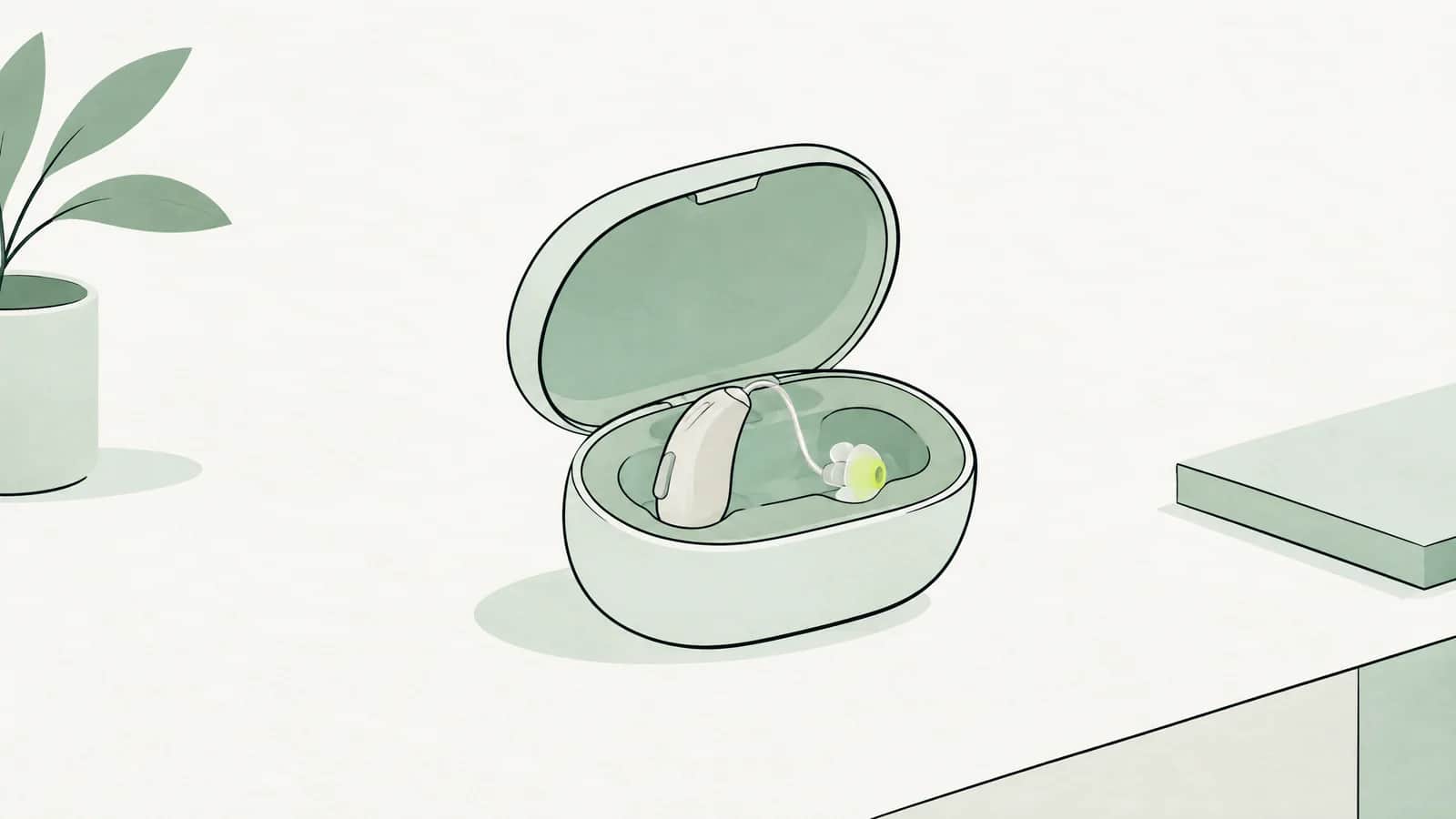
A hearing aid is a small electronic device that picks up sound, amplifies it and passes it on to the ear. It compensates for hearing loss that cannot be treated at its cause. There are devices worn behind or in the ear as well as implanted and bone-anchored hearing aids. If one ear is fitted, this is called monaural fitting; if both ears are fitted, it is called binaural fitting.
In Switzerland, the hearing aid is one of the aids and appliances. When it comes to financing, however, the health insurer is not the first in line. The law spreads the costs across several social insurances:
- Invalidity insurance (IV): for people up to retirement age whose hearing is significantly improved by the device.
- Old-age and survivors’ insurance (AHV): for recipients of an old-age pension resident in Switzerland, if they have severe hearing loss.
- Accident insurance: if the hearing loss is the result of an accident or an occupational disease.
- Basic health insurance: only if none of these insurances pays.
Invalidity insurance and AHV do not pay the full costs, but flat rates. Anything above that is paid by you, by supplementary insurance or, if needed, by supplementary benefits.
How it works
The path to a hearing aid usually begins with an ear, nose and throat (ENT) doctor. The examination itself is a normal medical benefit of basic health insurance; you pay your deductible and retention fee for it. After that, the financing of the device depends on your age and your situation.
Through IV (up to retirement age): IV pays a flat rate of CHF 840 for one device and CHF 1,650 for two devices, excluding repairs and batteries. For batteries there is CHF 40 or CHF 80 per calendar year, and for repairs by the manufacturer from the second year of use CHF 200 for electronic damage and CHF 130 for other damage. You can apply for a new flat rate at most every six years. The flat rate is paid out on presentation of the full invoice, and the device must be on the list of devices approved by the Federal Social Insurance Office (FSIO).
Through AHV (at retirement age): AHV pays 75% of the IV flat rate, i.e. CHF 630 for one device and CHF 1,237.50 for two, at most every five years. The condition is severe hearing loss. The entitlement is limited to the device; there are no further contributions, for example towards batteries. Anyone who already received hearing aids through IV before retirement age keeps this entitlement in type and scope as long as the conditions are met.
For children under 18: IV pays at most CHF 2,830 for one device and CHF 4,170 for two devices, including follow-up care. The payment goes directly to approved paediatric audiologists.
Through basic health insurance: If you do not meet the conditions of AHV, IV or accident insurance, basic health insurance covers the hearing aid. It reimburses it according to the AHV and IV provisions, so also as a flat rate. The device needs a doctor’s prescription.
Legal basis
The amounts are set out in the ordinances of the Federal Department of Home Affairs (FDHA) on aids and appliances:
- Annex no. 5.07 HVI: IV flat rate of CHF 840 (monaural) and CHF 1,650 (binaural), at most every six years, earlier if hearing has changed significantly. Battery flat rate CHF 40 or CHF 80 per year, repair flat rates CHF 200 and CHF 130 from the second year of use.
- Annex no. 5.07.3 HVI: maximum amount for children under 18 of CHF 2,830 (monaural) and CHF 4,170 (binaural), including VAT.
- Art. 2 and Annex no. 5.57 HVA: entitlement for old-age pensioners resident in Switzerland; with severe hearing loss 75% of the IV flat rate, at most every five years.
- Art. 4 HVA: anyone who received aids and appliances from IV up to the old-age pension keeps the entitlement in type and scope.
- Art. 25 para. 2 let. b of the Federal Health Insurance Act (KVG) and MiGeL item 13.01: basic health insurance reimburses means and objects on prescription. For hearing aids, the MiGeL refers to the AHV and IV provisions; basic health insurance only pays if the conditions of these insurances are not met. For batteries, the MiGeL sets maximum amounts of CHF 60.22 (monaural) and CHF 120.45 (binaural) per year.
- Art. 14 para. 1 let. f ELG: anyone receiving supplementary benefits has proven costs for aids and appliances reimbursed by the canton. The canton decides which costs.
Example: same devices, two life situations
Two people each buy two hearing aids (binaural fitting). The invoice is CHF 3,600 in both cases (an assumption for the example). The calculation uses the flat rates from HVI and HVA.
| Jonas, 45, through IV | Rosa, 71, through AHV | |
|---|---|---|
| Invoice for two devices | CHF 3,600 | CHF 3,600 |
| Flat rate from the insurance | CHF 1,650 | CHF 1,237.50 |
| Paid out of pocket | CHF 1,950 | CHF 2,362.50 |
| Batteries per year | CHF 80 flat rate | no contribution |
| Next flat rate at the earliest | after 6 years | after 5 years |
What this means for you
Before you buy, clarify which insurance is responsible and submit the application there. You can get the registration form for aids and appliances from the IV office of your canton or from your compensation office. These points will help you:
- Medical examination first. Without a finding from an ENT doctor there is no flat rate. Basic health insurance settles the examination as usual, with deductible and retention fee.
- Compare quotes. The flat rate is fixed. Ask the audiologist about devices that lie entirely or largely within the flat rate.
- Keep your receipts. The flat rate is paid out on presentation of the full invoice. Save the invoice and the decision, for example in your account.
- Check your supplementary insurance. Some supplementary outpatient insurance policies contribute towards hearing aids. What your product pays is set out in the policy conditions; the profiles of the health insurers show which supplementary insurance an insurer offers.
- Include supplementary benefits. If you receive supplementary benefits, submit the invoice there as well.
As basic health insurance rarely pays for hearing aids, it is worth looking at your premium: the premium calculator shows what the same basic health insurance costs at other insurers.
Common mistakes
- Submitting the hearing aid to the health insurer first. IV, AHV or accident insurance are responsible. Basic health insurance only pays if none of them is responsible.
- Thinking the flat rate covers the full cost. IV and AHV pay fixed amounts. The rest stays with you unless supplementary insurance or supplementary benefits step in.
- Replacing too early. Before six years (IV) or five years (AHV) have passed, there is only a new flat rate if your hearing has changed significantly.
- Buying a device that is not on the list. The flat rate only applies to devices that meet the insurance’s requirements.
- Forgetting accident insurance after an accident. If the hearing loss is the result of an accident, report the case there first.
We explain how we present benefits and sources under How we calculate.
Frequently asked questions
Does health insurance pay for a hearing aid?
Usually not. Invalidity insurance (IV), old-age and survivors’ insurance (AHV) or, after an accident, accident insurance are responsible first. Basic health insurance only pays if you do not meet the conditions of these insurances, and then according to their rules. Some supplementary insurance policies pay additional contributions; this is set out in the policy conditions.
How much does AHV pay towards a hearing aid?
75% of the IV flat rate. That is CHF 630 for one device and CHF 1,237.50 for two devices, at most every five years. The condition is severe hearing loss, and the device must improve your hearing significantly.
How often will a new hearing aid be paid for?
With IV at most every six years, with AHV at most every five years. Earlier replacement is only possible if your hearing has changed significantly.
Who pays for the hearing aid batteries?
IV pays an annual flat rate of CHF 40 for one device and CHF 80 for two. With AHV, the entitlement is limited to the device itself. The MiGeL of basic health insurance sets maximum amounts of CHF 60.22 and CHF 120.45 per year for batteries if basic health insurance is responsible.
Related terms
- Aids and appliancesAids and appliances are medical items and products such as crutches, incontinence products or inhalers that you use yourself at home. Basic health insurance reimburses them if a doctor has prescribed them and they are on the Aids and Appliances List (MiGeL), up to the maximum amount set there. For children’s glasses, that is at most CHF 180.67 per year.
- Invalidity insuranceInvalidity insurance (IV) is the compulsory social insurance for people whose ability to earn a living is permanently limited because of a congenital disorder, illness or accident. It first pays for integration measures and aids and appliances, and only then a pension from a degree of invalidity of 40%. For congenital disorders it covers treatment up to age 20, ahead of the health insurer.
- MiGeLThe MiGeL (Aids and Appliances List) is the federal list of medical products that basic health insurance pays for, such as crutches, blood glucose meters, dressings or breast pumps. For each product, it sets a maximum reimbursement amount. If a product costs more, you pay the difference yourself, plus your deductible and retention fee.
- Supplementary benefitsSupplementary benefits (Ergänzungsleistungen, EL) are means-tested payments from the Confederation and the cantons for people receiving an AHV or IV pension whose income does not cover minimum living costs. For basic health insurance, they include a lump sum paid directly to your health insurer. In addition, the canton reimburses the deductible, retention fee and other illness costs.
Sources
- FDHA Ordinance on the Provision of Aids and Appliances by the Invalidity Insurance (HVI), Annex no. 5.07Annex no. 5.07 HVIfedlex.admin.ch
- FDHA Ordinance on the Provision of Aids and Appliances by the Old-Age Insurance (HVA), Art. 2 and Annex no. 5.57Annex no. 5.57 HVAfedlex.admin.ch
- FOPH: Aids and Appliances List (MiGeL), edition of 01.07.2026, item 13.01 (German; no English version, also available in French and Italian)bag.admin.ch
- Federal Health Insurance Act (KVG), Art. 25Art. 25 para. 2 let. b KVGfedlex.admin.ch
- Federal Act on Supplementary Benefits to Old-Age, Survivors’ and Invalidity Insurance (ELG), Art. 14Art. 14 ELGfedlex.admin.ch