Key points at a glance
- Wegovy has been on the List of Pharmaceutical Specialties since 01.03.2024, and Mounjaro has also been listed for weight management since 01.01.2026, both with a time-limited limitation.
- It is reimbursed from a BMI of 35, or from a BMI of 28 with prediabetes, type 2 diabetes, high blood pressure or a lipid metabolism disorder.
- You need cost approval from your health insurer after consultation of its medical adviser, and a documented diet with a deficit of 500 kcal a day.
- After 16 weeks you must have lost at least 5% or 7% of your weight, after 10 months 10% or 12%; otherwise reimbursement ends.
- Basic health insurance pays for three years at most in total; according to the FOPH, online prescriptions do not meet the requirements.
What is the weight-loss injection?
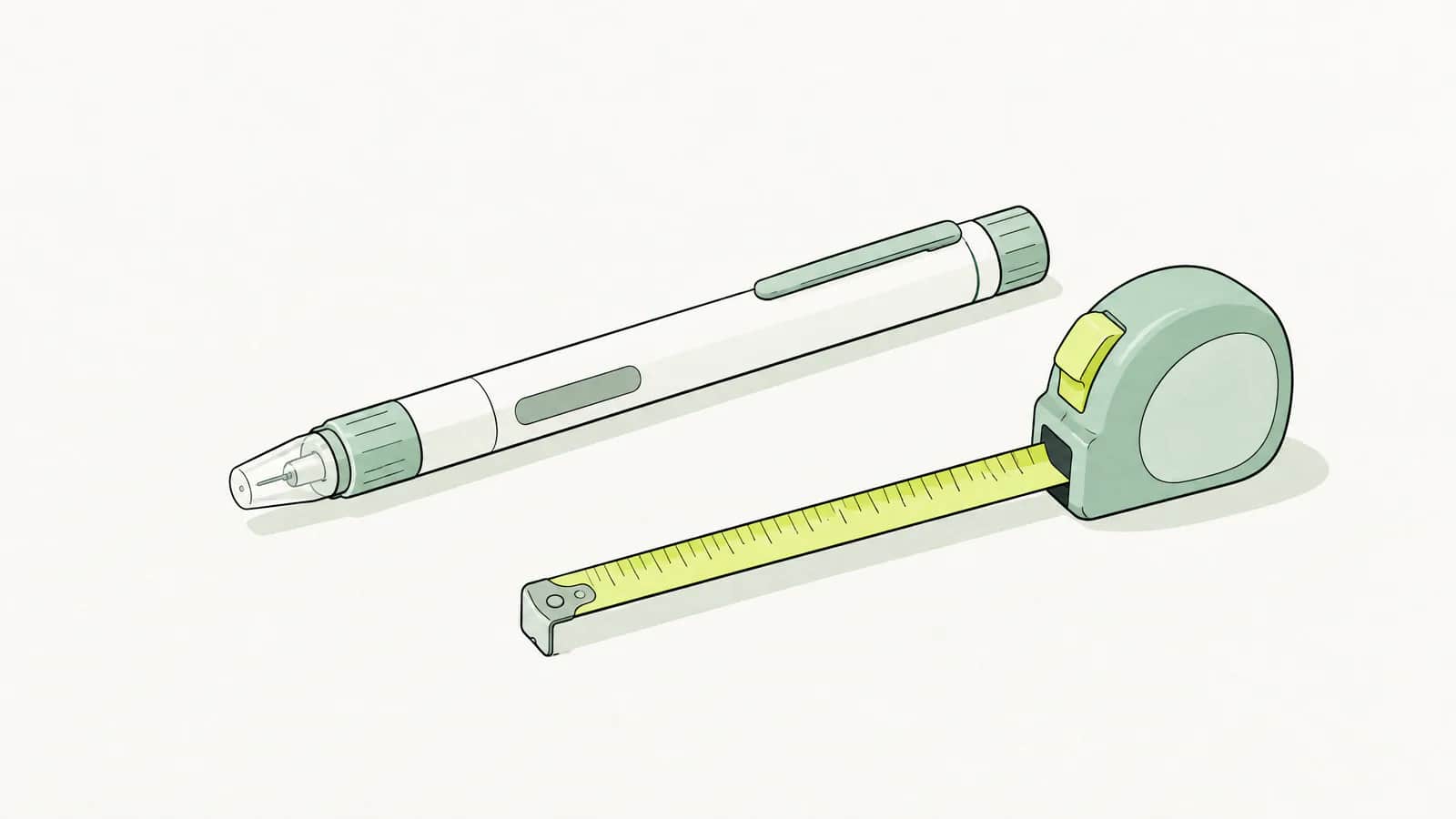
“Weight-loss injection” is the common name for medicines from the group of GLP-1 receptor agonists that are authorised for weight management. The best known are Wegovy, with the active substance semaglutide, and Mounjaro, with the active substance tirzepatide. You inject them yourself under the skin once a week using a prefilled pen. According to the FOPH, tirzepatide, for example, regulates appetite, reduces food intake and slows down gastric emptying.
The medicines are authorised by Swissmedic: Wegovy for weight management since 15.02.2022, Mounjaro since 09.07.2024. Authorisation, however, only means that the medicine may be sold. Whether your health insurer pays for it is decided separately by the FOPH: basic health insurance only routinely pays for medicines on the List of Pharmaceutical Specialties (SL), and often only under conditions known as the limitation.
For weight-loss injections the limitation is particularly strict. In this way, the FOPH wants to ensure that these expensive medicines are only used for people with a high medical need, where a large benefit can be expected. If you want to lose weight without meeting these requirements, you pay for the injection yourself.
Weight-loss injections should not be confused with Ozempic. Ozempic also contains semaglutide but is authorised for the treatment of type 2 diabetes. The FOPH considers reimbursing Ozempic for weight management to be unlawful.
How it works
For basic health insurance to pay for a weight-loss injection, all conditions of the limitation must be met. They are largely the same for Wegovy and Mounjaro:
- Weight: You are an adult and have a BMI of at least 35, or a BMI of at least 28 with a weight-related condition: prediabetes or type 2 diabetes, high blood pressure or a lipid metabolism disorder.
- Accompanying measures: The injection supplements a diet with a deficit of 500 kcal a day, accompanying nutritional advice and more physical activity that is documented, for example with a step counter. Compliance with the diet must be confirmed to the insurer.
- Prescription: Only specialists in endocrinology/diabetology or obesity centres that meet the criteria of the limitation may prescribe it: at least 100 people with obesity treated per 12 months for a specialist, at least 300 for a centre. For both Wegovy and Mounjaro, the prescription and progress checks must take place in person, not via telemedicine.
- Cost approval: The insurer must agree in advance, after consulting its medical adviser.
- Progress check: After 16 weeks you must have lost at least 5% of your starting weight (BMI 28 to under 35) or 7% (BMI 35 or more). After a further six months, the total must be 10% or 12%. Continuing requires new cost approval, followed by checks every six months.
- Duration: Basic health insurance pays for three years at most in total, even if you switch between products. If your BMI falls below 25, the therapy is ended.
The injection may not be combined with other GLP-1 medicines or other weight-loss medicines. If your insurer covers the costs, you pay the deductible and retention fee as with any medicine.
Legal basis
Under Art. 52 para. 1 let. b of the Health Insurance Act (KVG), the FOPH draws up the List of Pharmaceutical Specialties with the medicines and prices that basic health insurance covers. A medicine must be effective, appropriate and cost-effective (Art. 32 KVG). The FOPH can attach a limitation to the listing and make it time-limited. Wegovy was listed as of 01.03.2024, limited until 28.02.2027; at the time of listing the public price was CHF 188.15 per prefilled pen, and it is now CHF 176.95, the same for all doses (as of 25.09.2026). Saxenda (liraglutide) is no longer on the List of Pharmaceutical Specialties. The limitation for Mounjaro for weight management has applied since 01.01.2026 and is limited until 31.12.2027. The current prices and limitations are published on spezialitaetenliste.ch.
Outside the limitation, basic health insurance can only pay for a medicine in individual cases (Art. 71a–71b KVV). This requires that a large therapeutic benefit against a serious illness can be expected and that no other effective treatment is available. In its letter to insurers of 15.05.2025, the FOPH states that these requirements are not met for weight management outside the limitation, and that coordination via online services or online practices is ruled out.
Example: who is eligible?
Daniel is 45, 1.75 m tall and weighs 110 kg. His BMI is 110 ÷ (1.75 × 1.75) = 35.9. He is therefore above the threshold of 35 and would be eligible for reimbursement without a related condition, provided all other conditions are met.
| Checkpoint | Requirement with a BMI of 35 or more | Daniel’s target weight |
|---|---|---|
| Start | cost approval, diet, nutritional advice | 110 kg |
| after 16 weeks | at least 7% less | at most 102.3 kg |
| after 10 months | at least 12% less | at most 96.8 kg |
| after that | check every 6 months, weight not above the 10-month target | at most 96.8 kg |
| End of reimbursement | after 3 years at the latest |
What this means for you
- Clarify the requirements with a specialist. Your GP can refer you to a specialist in endocrinology/diabetology or to an obesity centre. Only there can it be prescribed at the expense of basic health insurance.
- Wait for cost approval. Only start the therapy once your insurer has agreed in writing. Otherwise you risk bearing the costs yourself.
- Plan for the co-payment. With a therapy lasting several months you will probably reach your deductible. Whether a lower deductible is therefore worthwhile, you can work out in the premium calculator. The deadline for a lower deductible is 30 November, see deadlines.
- Ask your supplementary insurer. Whether it covers anything outside the limitation is set out only in your contract. You can find the insurers’ offers under health insurers.
You can read more about prices and co-payments for medicines under medicines.
Common mistakes
- Ordering the injection online and submitting the bill. According to the FOPH, online medical practices do not meet the requirements for prescription. The insurer must reject such prescriptions.
- Expecting Ozempic for weight loss. Ozempic is authorised for diabetes. Basic health insurance does not reimburse it for weight management.
- Starting without cost approval. Without the insurer’s prior agreement there is no reimbursement.
- Not documenting the diet. Compliance with the diet is a requirement and must be confirmed to the insurer.
- Expecting unlimited therapy. Reimbursement by basic health insurance ends after three years in total.
We explain how we build our examples under How we calculate.
Frequently asked questions
Does health insurance pay for Wegovy?
Basic health insurance only pays for Wegovy if all conditions of the limitation are met: a BMI of 35 or more, or of 28 or more with certain related conditions, a documented diet, nutritional advice, more physical activity, a prescription by a specialist in endocrinology/diabetology or an obesity centre, and cost approval from your insurer.
Is Mounjaro paid for in Switzerland?
Since 01.01.2026, Mounjaro has also been on the List of Pharmaceutical Specialties for weight management, limited until 31.12.2027. Practically the same conditions apply as for Wegovy, including cost approval and a maximum of three years of therapy.
What happens if I do not lose enough weight?
Then the therapy at the expense of basic health insurance has to be stopped. If you do not reach the minimum weight loss after 16 weeks the first time you use it, you are in principle also excluded from resuming it later.
Does supplementary insurance pay for the weight-loss injection?
That depends on the contract. Some supplementary insurance policies cover part of the cost of medicines that are not on the List of Pharmaceutical Specialties or are used outside the limitation. Ask your insurer in writing before starting therapy.
Related terms
- List of Pharmaceutical Specialties (SL)The List of Pharmaceutical Specialties (SL, Spezialitätenliste) is the Federal Office of Public Health’s list of all medicines paid for by basic health insurance, together with their maximum prices. A medicine is only added if Swissmedic has authorised it and it is effective, appropriate and cost-effective. As a rule, basic health insurance does not pay for anything that is not on the SL.
- MedicinesBasic health insurance pays for medicines if a doctor prescribes them and they are on the FOPH’s List of Pharmaceutical Specialties, at most at the price set there. You pay the deductible and a 10% retention fee, or 40% for expensive original products with cheaper alternatives. You pay for medicines not on the list yourself or through supplementary insurance.
- Medicine pricesIn basic health insurance, medicine prices are maximum prices that the FOPH sets in the List of Pharmaceutical Specialties. The retail price consists of the ex-factory price, the distribution share and VAT. For a prescription-only medicine with an ex-factory price under CHF 4,721, a distribution share of 6% plus CHF 16 per pack is added. The FOPH reviews every price every three years.
- Nutritional adviceNutritional advice is a therapy in which licensed dietitians advise patients with certain illnesses. Basic health insurance pays for it on a physician’s order, for example for metabolic diseases, obesity with a BMI of 30 or more, or food allergies. It covers at most 6 sessions per order, minus the deductible and retention fee.
Sources
- Federal Health Insurance Act (KVG), Art. 52Art. 52 para. 1 let. b KVGfedlex.admin.ch
- Health Insurance Ordinance (KVV), Art. 71a–71bArt. 71a–71b KVVfedlex.admin.ch
- FOPH: Wegovy, new listing in the List of Pharmaceutical Specialties as of 01.03.2024 (PDF, German)bag.admin.ch
- FOPH: Mounjaro, extension of the limitation (weight management) as of 01.01.2026 (PDF, German)bag.admin.ch
- FOPH: Letter to insurers on the reimbursement of Mounjaro and Wegovy, 15.05.2025 (PDF, German)bag.admin.ch
- List of Pharmaceutical Specialties (SL)spezialitaetenliste.ch
- Federal Health Insurance Act (KVG), Art. 64Art. 64 KVGfedlex.admin.ch