Key points at a glance
- Insurers with a below-average number of people with an increased risk of illness pay risk levies, the others receive equalisation contributions (Art. 16 KVG).
- The indicators are age, sex, a stay of at least three nights in a hospital or nursing home in the previous year and pharmaceutical cost groups (Art. 1 VORA).
- Children under 19 are excluded from risk equalisation; for young adults aged 19 to 25, the insurers receive relief.
- The Common Institution under the Federal Health Insurance Act carries out risk equalisation every year and for each canton.
What is risk equalisation?
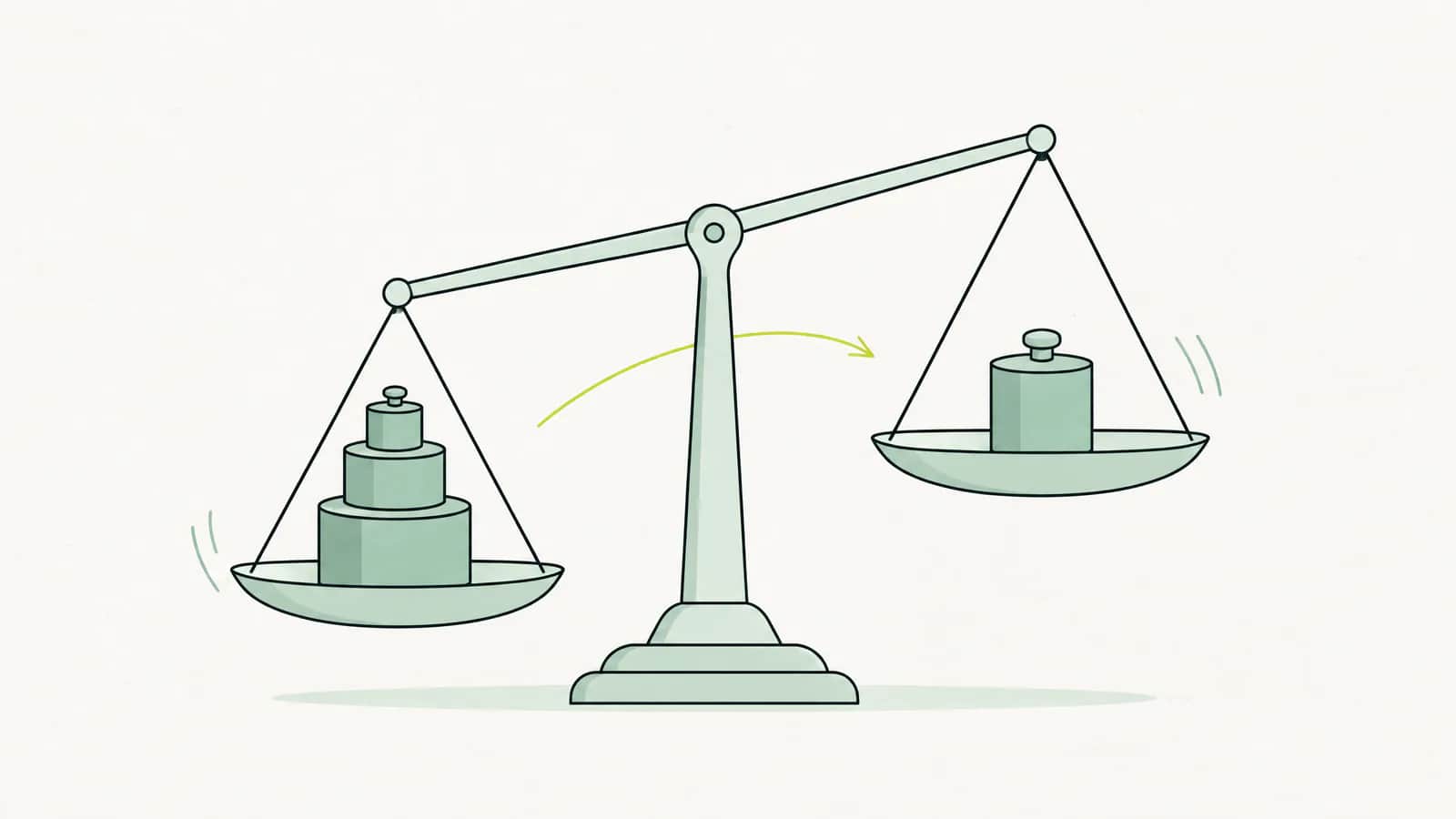
Risk equalisation is a redistribution mechanism between health insurers in basic health insurance. It compensates for the fact that insurers have insured persons who are “expensive” to different degrees. An insurer whose insured persons are younger and healthier than average pays money into a pot. An insurer with many older or sick insured persons receives money from it.
The reason lies in the rules of basic health insurance. Every insurer must accept everyone in its area of activity; this is the obligation to accept. And it must in principle charge all insured persons the same premium, graded only by canton, region, age group, deductible and model, never by state of health. Without risk equalisation, an insurer could still be cheaper simply because its advertising or offers mainly attract young, healthy people. Risk equalisation is intended to make this so-called risk selection unattractive.
Risk equalisation only concerns basic health insurance under the Federal Health Insurance Act (KVG). It does not exist in supplementary insurance under the Insurance Contract Act (VVG/ICA); there, insurers may ask health questions and turn people down.
It is carried out by the Common Institution under the Federal Health Insurance Act, a foundation of the health insurers with statutory tasks. Risk equalisation is not a state contribution. The money flows between the insurers: the levies of some finance the equalisation contributions of others.
How it works
Risk equalisation is calculated separately for each calendar year and for each canton. The basic idea: for each group of insured persons, the average cost across all insurers is calculated. If an insurer has more insured persons in expensive groups, it receives contributions; if it has more in inexpensive groups, it pays levies.
The groups are formed from four indicators:
- Age. The year of birth is what counts. There is a group for 19- to 25-year-olds, five-year groups between 26 and 90 and a group for those aged 91 and over.
- Sex.
- Stay in a hospital or nursing home. An increased risk is assumed if someone spent at least three consecutive nights in a hospital or nursing home in the previous year, at the expense of basic health insurance. Stays due to maternity do not count.
- Pharmaceutical cost groups (PCG). Anyone who obtained a certain minimum quantity of medicines used for a particularly cost-intensive illness in the previous year is assigned to a PCG. The insurer receives supplements for such insured persons.
Two groups have special rules. Children who are under 19 on 31 December of the year are excluded from risk equalisation. For young adults aged between 19 and 25, the insurers receive relief: it amounts to 50% of the difference between the average costs of all adults and those of young adults. This makes lower premiums for young adults possible.
Every year, by 31 March, the insurers send the data to the Common Institution, in pseudonymised form for each insured person. This includes canton of residence, year of birth, sex, hospital stays, medicines obtained, months insured, benefits and co-payments.
Legal basis
Risk equalisation is governed by Art. 16 to 17a of the Federal Health Insurance Act (KVG). Art. 16 para. 1 and 2 KVG stipulate that insurers with fewer people with an increased risk of illness than the average pay risk levies to the Common Institution and that insurers with an above-average number of such people receive equalisation contributions. Under Art. 16 para. 3 KVG, the levies and contributions must fully compensate for the average differences in risk between the risk groups. Art. 16 para. 4 KVG names age, sex and other indicators of morbidity; Art. 16 para. 5 KVG excludes children.
Art. 16a KVG governs the relief for young adults aged 19 to 25 at 50% of the cost difference. Art. 17 KVG specifies that the insured populations in the equalisation year are decisive and that the differences in risk are calculated from the previous year. Under Art. 17a KVG, the Common Institution carries out risk equalisation within the individual cantons; Art. 18 KVG governs this foundation of the insurers.
The details are set out in the Ordinance on Risk Equalisation in Health Insurance (VORA). Art. 1 VORA names the four indicators, Art. 2 the age groups, Art. 3 the stay of at least three nights in a hospital or nursing home, and Art. 4 and 5 the pharmaceutical cost groups. Art. 6 VORA governs the delivery of data by 31 March.
Example: two insurers, same benefits
The following example is greatly simplified and calculated with assumed figures. It only shows the principle, not the actual calculation by the Common Institution. Two insurers in the same canton each have 1,000 adult insured persons. Assume that insured persons without an increased risk cost CHF 3,000 a year on average in the canton and insured persons with an increased risk CHF 12,000. The average across both insurers is CHF 5,250.
| Insurer A | Insurer B | |
|---|---|---|
| Insured persons without increased risk | 900 | 600 |
| Insured persons with increased risk | 100 | 400 |
| Total expected costs | CHF 3,900,000 | CHF 6,600,000 |
| Expected costs per head | CHF 3,900 | CHF 6,600 |
| Deviation from the average (CHF 5,250) per head | CHF −1,350 | CHF +1,350 |
| Equalisation | pays a levy of CHF 1,350,000 | receives a contribution of CHF 1,350,000 |
What this means for you
As an insured person, you have no direct contact with risk equalisation. However, it has consequences for your choice:
- You can choose any insurer. Because chasing good risks is less worthwhile, insurers have less incentive to keep sick insured persons away. In basic health insurance, every insurer has to accept you anyway.
- Premium differences have other causes. Compare the premiums for your place of residence in the premium calculator. You can find key figures such as the administrative costs and reserves of individual insurers in the profiles under Health insurers.
- You can switch every year. The deadlines are under Deadlines.
Risk equalisation is part of the system with many insurers in competition; the alternative model would be a single health insurance fund. The FOPH (Federal Office of Public Health) publishes the insurers’ key figures, including the amounts from risk equalisation, in its supervisory data.
Common mistakes
- Thinking risk equalisation is a state subsidy. It is an adjustment between insurers. The state does not pay anything into it.
- Believing equalisation applies to supplementary insurance. It only applies in basic health insurance.
- Assuming that all insurers must then cost the same. Equalisation covers differences in risk, not differences in efficiency, reserves or models.
- Thinking your health data goes openly to other insurers. The insurers send the data in pseudonymised form to the Common Institution, not to other insurers.
We explain how we build examples and key figures under How we calculate.
Frequently asked questions
Why is there risk equalisation?
In basic health insurance, every insurer must accept everyone and may not grade the premium according to health. Without equalisation, insurers with many young, healthy insured persons would have an advantage that has nothing to do with good work. Risk equalisation evens out these differences.
Do I notice risk equalisation as an insured person?
Not directly. You do not pay a levy and do not receive a contribution. The equalisation flows between the insurers and affects their costs and thus, indirectly, the premiums.
Who calculates risk equalisation?
The Common Institution under the Federal Health Insurance Act. Every year, by 31 March, the insurers send it pseudonymised data for each insured person, such as year of birth, sex, hospital stays and medicines obtained.
Does risk equalisation affect which insurer is cheap?
It reduces the advantages an insurer would have purely because of a young and healthy insured population. Premium differences between insurers still exist, for example because of administrative costs, reserves, insurance models and the checking of benefits.
Related terms
- Common Institution KVG (Gemeinsame Einrichtung KVG)The Common Institution under the Federal Health Insurance Act (Gemeinsame Einrichtung KVG) is a foundation set up by all health insurers and based in Olten. It carries out tasks that no single insurer can take on: it runs risk equalisation, pays benefits if an insurer becomes insolvent, and looks after insured persons with links to the EU, EFTA states and the United Kingdom.
- Health insurerA health insurer is a company licensed by the Federal Office of Public Health (FOPH) to provide basic health insurance under the KVG; in everyday language, a health insurance fund. As at 01.01.2026 there were 34 of them. They must accept every person required to take out insurance, may not make a profit from basic health insurance and often also offer supplementary insurance under the ICA.
- Single health insurance fundA single health insurance fund is one public health insurer that provides basic health insurance for everyone instead of many insurers. Switzerland does not have one: according to FOPH premium data, 34 health insurers offer basic health insurance in 2026. Voters rejected a single fund in 2007 with 71.2% and in 2014 with 61.8% voting no.
- Health insurers’ reservesReserves are a health insurer’s equity capital in basic health insurance: the amount by which its assets exceed its liabilities. They ensure that the insurer can still pay in an expensive year. As at 01.01.2025, all insurers together held CHF 7,772.0 million in reserves, 147% of the statutory minimum.
- Obligation to acceptThe obligation to accept requires every health insurer to accept every person who is required to take out insurance into basic health insurance within its area of operation, regardless of age and health. There is no health questionnaire, no reservation and no waiting period. The obligation to accept does not apply to supplementary insurance: there, the insurer may ask health questions and refuse you.
Sources
- Federal Health Insurance Act (KVG), Art. 16–17aArt. 16–17a KVGfedlex.admin.ch
- Ordinance on Risk Equalisation in Health Insurance (VORA), Art. 1–5Art. 1–5 VORAfedlex.admin.ch
- Ordinance on Risk Equalisation in Health Insurance (VORA), Art. 6Art. 6 VORAfedlex.admin.ch
- Federal Health Insurance Act (KVG), Art. 18Art. 18 KVGfedlex.admin.ch
- Federal Health Insurance Act (KVG), Art. 61Art. 61 KVGfedlex.admin.ch
- Common Institution under the Federal Health Insurance Act (Gemeinsame Einrichtung KVG)kvg.org
- FOPH: Supervisory data Health insurersbag.admin.ch