EFAS stands for uniform financing of outpatient and inpatient services. From 01.01.2028, the cantons pay 26.9 % of the net costs of all basic health insurance benefits and premiums 73.1 %; today, premiums alone pay for outpatient treatment. Long-term care follows from 01.01.2032. Your benefits, deductible and retention fee stay the same; what may change is how premiums develop.
Key points at a glance
- Parliament: final vote on 22.12.2023; accepted in the popular vote of 24.11.2024 with 53.31 % in favour (FOPH).
- From 01.01.2028, the cantons pay 26.9 % of the net costs of all outpatient and inpatient services, and 73.1 % comes from premiums (FOPH).
- Until 31.12.2027: the canton pays at least 55 % of inpatient hospital costs, and premiums alone pay for outpatient services (Art. 49a para. 2ter KVG).
- From 01.01.2032, long-term care at home and in nursing homes will also be financed uniformly; the contribution of people in need of care may not rise with the changeover (FOPH).
- EFAS does not change the benefits catalogue, the deductible, the retention fee or your free choice of insurer.
What EFAS changes and what it does not
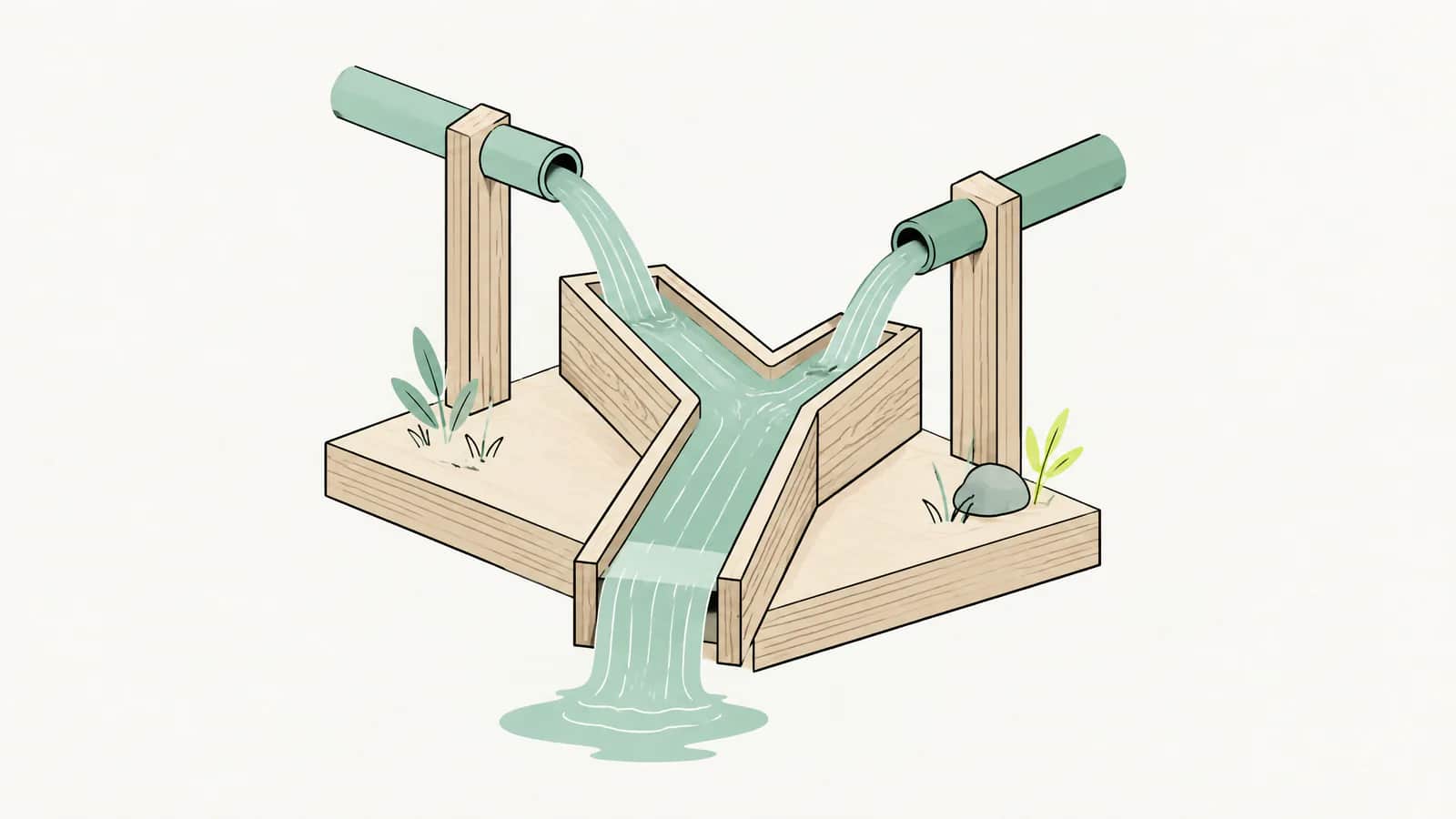
EFAS stands for the uniform financing of outpatient and inpatient services. The reform does not change what basic health insurance pays for, but who pays: the canton from tax revenue or the insurer from premiums. Today, the answer depends on whether you stay overnight in hospital. From 2028, the same key applies to all services.
| Area | until 31.12.2027 | from 01.01.2028 | from 01.01.2032 |
|---|---|---|---|
| Inpatient in a listed hospital | canton at least 55 %, premiums at most 45 % | canton 26.9 %, premiums 73.1 % | as in 2028 |
| Outpatient (practice, hospital outpatient department) | premiums 100 % | canton 26.9 %, premiums 73.1 % | as in 2028 |
| Care at home and in nursing homes | contribution from insurer and person in need of care, rest paid by canton or municipality | unchanged | financed uniformly |
| Contract hospital (not on the Hospital List) | basic health insurance 45 % | basic health insurance 45 % | as in 2028 |
The percentages from 2028 refer to net costs, i.e. the costs after deducting your co-payment. Today, the canton of residence pays at least 55 % of the total inpatient hospital remuneration (Art. 49a para. 1 of the Federal Health Insurance Act, KVG); each canton sets this cantonal share no later than nine months before the start of the year (Art. 49a para. 2ter KVG). Outpatient treatment is financed entirely by premiums.
What stays the same: the benefits of basic health insurance, your free choice of insurer, the deductible and retention fee (Art. 103 KVV), the hospital contribution of CHF 15 per day (Art. 104 KVV) and your free choice of hospital among listed hospitals (Art. 41 para. 1bis KVG). EFAS is not an insurance you have to take out.
Why the reform is coming
Many procedures for which people used to stay overnight in hospital are now carried out on an outpatient basis. Since 2019, the rule outpatient before inpatient has even made this mandatory for selected procedures (Art. 3c KLV). Outpatient treatment is usually cheaper. But because the canton only contributes to inpatient treatment, every such shift moves costs from taxpayers to premium payers. According to the FOPH, premiums have therefore risen faster than the total costs of KVG services, and insurers had little incentive to promote the shift.
With EFAS, the canton pays the same share for both types of treatment. A cheaper outpatient treatment then relieves the canton and premium payers alike. According to the FOPH, coordinated care across the entire treatment chain is also to be strengthened, because financing no longer breaks off between the areas.
Timetable and implementation status
As of 25.09.2026 (source: FOPH):
- 22.12.2023: Both chambers adopt the KVG amendment in the final vote. It goes back to parliamentary initiative 09.528 “Financing of health services from a single source”.
- 24.11.2024: Following a referendum, voters accept the bill with 53.31 % in favour.
- 01.04.2026 to 08.07.2026: Consultation on the ordinances needed for the first stage: amendments to the KVV and the KLV and a total revision of the Ordinance on Cost Calculation and Service Recording (VKL).
- Open: The Federal Council’s decision on the ordinances. Until then, the new provisions are not in force and are not included in the version of the KVG in force on fedlex.
- 01.01.2028: Uniform financing of outpatient and inpatient services.
- 01.01.2032: Inclusion of long-term care at home and in nursing homes.
Until the end of 2027, current law applies unchanged. We will update this page as soon as the Federal Council has adopted the ordinances; you will also find new developments under News.
What the cantons will newly be allowed to do
Because the cantons will in future also co-finance outpatient services, they will have more say, according to the FOPH:
- Tariffs: The cantons will now be represented in the tariff organisation for medical outpatient services, i.e. for TARDOC and the outpatient flat rates. For long-term care, a new tariff organisation will be set up with service providers, insurers and cantons.
- Admission: For all categories of outpatient service providers, they can provide that no new admissions are possible if costs in a category are rising at an above-average rate or are high.
- Data and invoices: They receive data from insurers for their tasks under the KVG and continue to receive copies of inpatient invoices. Whether a service is effective, appropriate and cost-effective in an individual case is still checked by the insurer.
- Flow of money: The insurer pays all invoices. A committee of the Common Institution under the Federal Health Insurance Act calculates the cantonal contributions on the basis of the services provided, collects them from the cantons and distributes them to the insurers.
For you, this means that your invoices continue to go to your insurer or to you, as they do today. The article Checking a TARDOC invoice explains how to read an outpatient medical invoice.
What EFAS may mean for premiums
The cantonal share of 26.9 % has been set so that the change is cost-neutral for Switzerland as a whole compared with the years 2016 to 2019, for the cantons and for premium payers alike (FOPH). Since then, financing has shifted: because outpatient services have grown faster, the cantons’ share has fallen. In its document of 08.07.2026, the FOPH calculated what would have happened if EFAS had already applied with the 2024 costs.
| Period | Effect for premium payers, Swiss average | Effect for the cantons |
|---|---|---|
| Transition 2028–2031 (without long-term care) | relief of just over CHF 90 per person per year, a total of just over CHF 800 million | additional burden of the same amount |
| From 2032 (with long-term care) | relief of just over CHF 50 per person per year, a total of just under CHF 500 million | additional burden of the same amount |
The FOPH expressly stresses that these figures are not a forecast but a tool for the budgets of cantons and insurers. What matters are the actual costs in 2028 and 2032. There are large differences between the cantons: in some cantons, premium payers are more likely to be relieved; in others, the canton can reduce its burden at the expense of premiums if it sets its share at the permitted minimum. According to the FOPH, when approving premiums it ensures that any relief for insurers resulting from a rising cantonal contribution is passed on to insured persons.
The FOPH publishes the next year’s premiums at the end of September. You can compare the 2026 premiums in your municipality in the premium calculator:
Sample calculation: the same procedure, today and from 2028
Example with fictitious people. Stefan, 61, is due to have a planned procedure that can be done on an outpatient or an inpatient basis. The treatment costs are assumed; the shares come from the law in force (today, with the minimum share of 55 %) and from the FOPH’s figures (from 2028). For simplicity, net costs are shown for both systems, i.e. after Stefan’s co-payment; strictly speaking, the canton today calculates its 55 % on the total hospital remuneration.
| Variant | Net costs | Canton today | Premiums today | Canton from 2028 | Premiums from 2028 |
|---|---|---|---|---|---|
| Inpatient, 2 nights | CHF 9,000 | CHF 4,950 | CHF 4,050 | CHF 2,421 | CHF 6,579 |
| Outpatient | CHF 5,000 | CHF 0 | CHF 5,000 | CHF 1,345 | CHF 3,655 |
The calculation shows the principle, not your future premium. The articles Why premiums are rising and Who earns from the premium explain why premiums rise and who earns from them.
Special cases
Long-term care at home and in nursing homes from 2032
Today, basic health insurance makes a contribution to care services depending on the need for care, people in need of care pay a limited share, and the canton or municipality finances the rest (Art. 25a KVG). This is how the current financing of long-term care works. From 01.01.2032, long-term care will be included in uniform financing. Care services will then be remunerated through tariffs based on the costs of efficient service provision. People in need of care will continue to pay a contribution, the amount of which is set by the Federal Council. At the changeover, it must set the contribution so that it is not higher than before, and may not increase it for at least four years afterwards (FOPH). Accommodation, meals and support in a nursing home are not part of basic health insurance and are not affected by EFAS. More on this in the article Nursing home costs.
Contract hospitals and supplementary insurance
For hospitals that are not on a cantonal Hospital List, the share paid by basic health insurance remains at 45 %, according to the FOPH; as today, the canton pays nothing. You or your supplementary insurance pay the rest. If you stay in a semi-private or private ward in a listed hospital, supplementary insurance continues to cover the additional costs above the general ward; what counts is the general terms and conditions of your insurer.
Insurance models and deductible
EFAS changes nothing about the rules of the GP, HMO or telemedicine models and nothing about the deductibles you can choose. The model finder shows which models exist and which one suits your habits. Independently of EFAS, politicians are discussing a higher minimum deductible; the article Minimum deductible CHF 400 explains the current status.
Common mistakes
- Thinking EFAS is a new insurance. EFAS is a financing reform between cantons and insurers. You do not need to take out or cancel anything.
- Believing EFAS already applies. Until 31.12.2027, the current split applies, with a cantonal share of at least 55 % in hospital.
- Expecting a certain premium reduction. The FOPH’s interim status shows possible relief but is expressly not a forecast. Premiums follow total costs.
- Expecting long-term care to be included as early as 2028. Care services are only added from 01.01.2032.
- Putting off comparing insurers because of the reform. The differences in premium between insurers remain. If you want to switch, your notice of cancellation must reach your insurer by 30 November; the deadline calculator shows the dates.
You will find more basics, from invoices to premiums, in the topic area Understanding basic insurance. If a single invoice seems too high, the article Invoice too high will help. Reserves, costs and contact details for the insurers are in the health insurer profiles.
Frequently asked questions
What is EFAS?
EFAS stands for the uniform financing of outpatient and inpatient services in basic health insurance. From 2028, the cantons pay the same share of 26.9 % of the net costs for all services, whether or not you stay overnight for treatment. From 2032, this also applies to long-term care.
Will premiums become cheaper with EFAS?
That cannot be promised. The cantonal share was set so that the change is cost-neutral compared with 2016–2019. According to an interim calculation by the FOPH based on 2024 costs, premium payers would be relieved by just over CHF 90 per person per year in the transition period 2028–2031; the FOPH stresses that this is not a forecast.
Does EFAS change my benefits or my deductible?
No. EFAS governs who pays for the services, not which services basic health insurance covers. The deductible, retention fee and hospital contribution remain as set by law.
When does EFAS apply?
For outpatient and inpatient services from 01.01.2028, for long-term care at home and in nursing homes from 01.01.2032. Until the end of 2027, the current system applies, with a cantonal share of at least 55 % in hospital.
Do I have to do anything because of EFAS?
No, you do not need to take out or cancel anything. It still makes sense to compare premiums every autumn, because the differences in premium between insurers remain.
Sources
- FOPH: KVG amendment: uniform financing of services (retrieved on 25.09.2026) (German)bag.admin.ch
- FOPH: Popular vote on the KVG amendment (uniform financing of services) (German)bag.admin.ch
- FOPH: Financial impact of the transition to uniform financing on cantons and premium payers, interim status 2024 (08.07.2026) (German)bag.admin.ch
- Curia Vista: parliamentary initiative 09.528 “Financing of health services from a single source” (content in German, French and Italian)parlament.ch
- Federal Health Insurance Act (KVG), Art. 49a (version in force)Art. 49a paras 1 and 2ter KVGfedlex.admin.ch
- KVG, Art. 25a (care services, version in force)Art. 25a KVGfedlex.admin.ch
- KVG, Art. 41 (choice of service provider)Art. 41 para. 1bis KVGfedlex.admin.ch
- Health Care Benefits Ordinance (KLV), Art. 3c (outpatient before inpatient)Art. 3c KLVfedlex.admin.ch
- Health Insurance Ordinance (KVV), Art. 103 and 104Art. 103, 104 KVVfedlex.admin.ch
Read more
- Bill too high? How to check and dispute a doctor’s bill and a statement of benefitsDuplicate items, services you never received, a wrongly calculated deductible: how to find errors on a doctor’s bill, a copy of the invoice and a statement of benefits, and how to get them corrected.Understanding basic insurance
- Minimum deductible of CHF 400: what the bill provides and who it affectsThe planned increase of the minimum deductible to CHF 400: content of the bill, status of the procedure, additional costs in francs and who would be particularly affected.Understanding basic insurance